
Compression Design
Understanding Golf Ball Deformation at Impact.
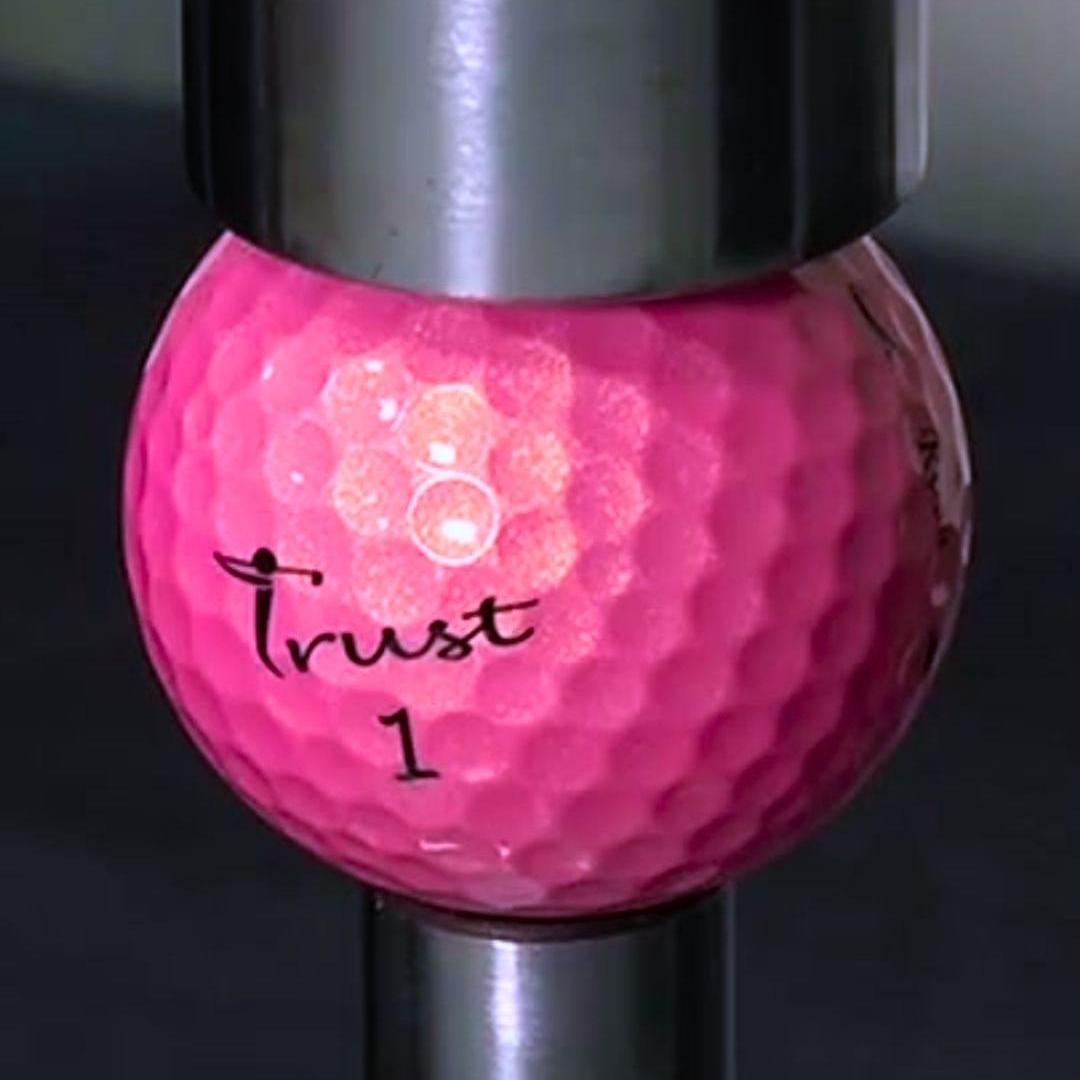
When a golf ball is struck, performance is governed by controlled elastic deformation of the core. At impact, kinetic energy from the clubhead is temporarily stored as elastic deformation within the ball and then released as rebound velocity.
For maximum distance and efficiency, the golf ball must deform in an optimal range:
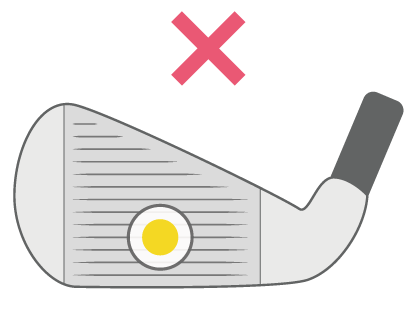
Under Deformation
(ball too firm for swing speed)
The ball does not compress sufficiently, reducing energy transfer and lowering rebound efficiency.
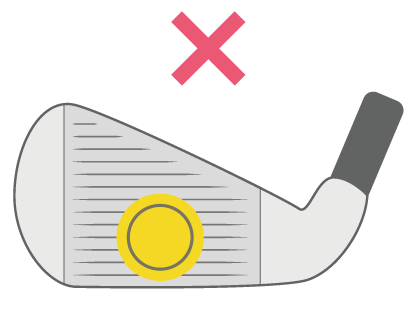
Over Deformation
(ball too soft for swing speed)
Excessive deformation dissipates energy internally, reducing rebound velocity and distance.
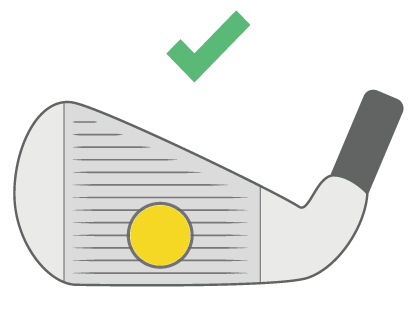
Optimal Deformation
(compression matches swing speed)
The ball compresses and recovers efficiently, maximizing COR, ball speed, and launch consistency.
Selecting the correct golf ball compression ensures the highest conversion of clubhead speed into ball speed.

Why Compression Matters
Every golfers are build different. Physical strength, swing speed, and even the club design, can affect how they swing and hit the golf ball.
When golf ball compression does not match golfer’s swing characteristics:
-
Energy transfer becomes inefficient
-
Launch conditions become inconsistent
-
Distance and feel suffer
Trust’s compression design addresses this mismatch by offering multiple compression-tuned cores, allowing golfers to select a ball that deforms correctly for their swing speed.
Engineering Definition
Compression Rating Formula
During research and development, Trust Golf evaluates compression using an industry-recognized (PGA Rating) physical model:
Compression = 180 – (Deformation × 1,000)
-
"Deformation" is measured under 200 lbs. of applied load
-
Each 0.001 inch of deformation corresponds to 1 compression point
-
Higher compression values indicate lower deformation (firmer golf ball)
-
Lower compression values indicate greater deformation (softer golf ball)
This approach allows us to quantify compression not as a subjective “feel,” but as a measurable mechanical response of the core.
Core Design Principle
Our core technology is engineered around three measurable performance objectives:
Durability
The core formulation maintains compression stability over repeated high-energy impacts, ensuring consistent deformation characteristics throughout the ball’s lifespan.
High COR (Coefficient of Restitution)
Optimized polymer structure maximizes elastic energy return, increasing ball speed and extending flight time.
Consistency
Tight manufacturing tolerances ensure uniform deformation behavior across all production batches, improving shot-to-shot repeatability.
Our Compression-Based Product Lineup
Panther
Rosa
Aurora
Bison V Power
Bison X Power
Compression Rate
60-65
70-75
75-80
80-85
85-90
Swing Speed
below 85 mph
below 95 mph
below 105 mph
below 105 mph
above 105 mph
Feel
softest
soft
soft-responsive
soft-responsive
responsive
Comparable Product
Supersoft
AVX
ProV1
ProV1
ProV1X
Each model is designed around measured compression behavior, not just feel preference, ensuring performance alignment with golfer's swing dynamics.
Our Compression-Based Product Lineup
Each model is designed around measured compression behavior, not just feel preference, ensuring performance alignment with golfer's swing dynamics.
Compression Rate
Swing Speed
Feel
Comparable Product
Panther
60-65
below 85 mph
softest
Supersoft
Rosa
70-75
below 95 mph
soft
AVX
Aurora
75-80
below 105 mph
soft-responsive
ProV1
Bison V Power
80-85
below 105 mph
soft-responsive
ProV1
Bison X Power
85-90
above 105 mph
responsive
ProV1X
Check Trust Golf Ball
Explore Trust Golf balls engineered for soft feel, stability, and dependable distance.
or explore other Trust's Technology